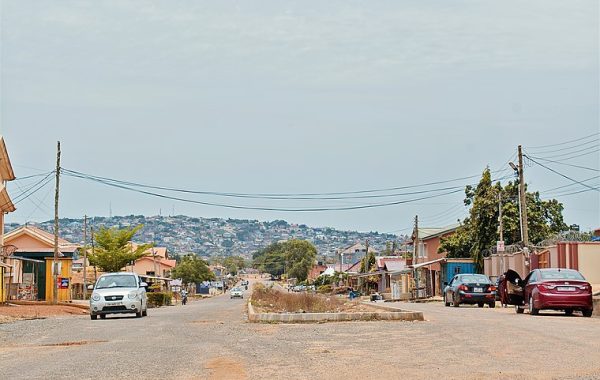
Living in Weija offers something increasingly difficult to find in Accra: more residential space, major everyday amenities and a quieter suburban lifestyle while remaining connected to the city. For families, professionals and property buyers who do not need to live in the traditional Airport, Cantonments, East Legon triangle, Weija has become a serious alternative.
And the area is growing.
Ghana Statistical Service projects the population of the Weija-Gbawe Municipality at approximately 246,204 people in 2026, up from 213,674 in 2021. That is an increase of roughly 15% in five years.
Having watched West Accra develop, one of the biggest changes is not simply the number of buildings. It is the lifestyle infrastructure around them. Shopping, healthcare, schools, recreation and professionally managed residential developments have made living west of central Accra considerably more practical than it once was.
Is Weija a Good Place to Live in Accra?
Yes. Weija can be a good place to live for people who want a suburban environment, access to shopping and family amenities, and potentially more property for their budget than in many prime central Accra neighbourhoods.
There is, however, an important caveat: where you buy or rent within Weija matters. Certain low-lying communities downstream of the Weija Dam have a documented flood risk, so buyers should investigate the exact location, elevation and drainage conditions of a property rather than judging the entire Weija area as one market.
That distinction is important and often missing from property marketing.
1. West Hills Mall Makes Everyday Life Easier
One reason living in Weija works better today is that residents do not necessarily need to travel into central Accra for everyday shopping and entertainment.
West Hills Mall is located on Winneba Road at Dunkonah, New Weija. Its mix includes retail, restaurants, financial and healthcare-related services, entertainment and a cinema complex. The centre currently operates from 10am to 8pm daily.
That sounds like a small convenience until you live it.
Being able to buy groceries, meet friends, go to the cinema, handle an errand or eat out without crossing half of Accra can change the rhythm of family life considerably.
For residents of Eden Heights, the advantage is even more noticeable because the development sits close to West Hills Mall.
2. Weija Is Becoming a Proper Residential Hub
Weija should no longer be viewed simply as somewhere on the way from Accra towards Kasoa.
The municipality’s population growth tells part of the story. Ghana Statistical Service expects Weija-Gbawe to grow from about 213,674 residents in 2021 to more than 305,000 by 2035.
That expanding population creates demand for housing, shops, schools, healthcare and other services.
For a property buyer, this is worth watching. Growing population does not automatically guarantee property appreciation, but sustained residential demand combined with improving amenities can strengthen the fundamentals of an area over time.
It is one reason West Accra deserves to be assessed on where it is heading, not only on what it looked like ten years ago.
3. Families Have Schools and Healthcare Closer to Home
A beautiful apartment loses some of its appeal when every school run or medical appointment requires an exhausting journey across Accra.
Weija-Gbawe’s social infrastructure has expanded alongside its residential population.
Municipal data records 51 health facilities across Weija, Mallam and Oblogo, alongside 29 public schools within the municipality’s three education circuits.
There is another encouraging indicator. In March 2026, the Weija-Gbawe Municipal Assembly reported that Weija-Gbawe Municipal Hospital was named the overall best-performing hospital in Greater Accra in the regional health directorate’s 2025 performance review.
For families considering a long-term home, these are not minor details. Schools, healthcare and daily services are part of the property’s real location value.
4. You Can Get a Different Kind of Accra Lifestyle
Ask someone why they are considering Cantonments, and the answer may be proximity.
Ask someone why they are considering Weija, and the conversation is often different: space.
West Accra gives developers the opportunity to create larger, more self-contained residential environments than are practical on increasingly scarce inner-city land.
At Eden Heights, for example, the proposition extends beyond the apartment itself. Residents have access to recreational and sports facilities, including a swimming pool, football pitch, tennis, basketball and volleyball facilities and a gym, alongside security and professionally managed common areas.
For a family with children or someone who simply wants to come home and actually enjoy where they live, that difference can be significant.
5. Weija Gives You Access to the Western Side of Accra
Location is not only about distance to Airport City.
It is also about where you actually spend your time.
From Weija, residents have relatively straightforward access towards Mallam, Dansoman and other parts of West Accra, while the Accra-Cape Coast corridor also provides connections towards Kasoa and the Central Region.
Leisure is another advantage. Kokrobite and Bojo Beach are among the coastal destinations accessible from the western corridor, making a beach afternoon or weekend outing considerably more convenient than it is from some eastern parts of Accra.
Commuters should nevertheless be realistic. Accra journey times vary substantially with traffic. A location that works beautifully at 11 am may feel very different during the weekday rush, so prospective residents should test their actual commute at the times they normally travel.
6. Property Buyers May Find an Alternative to Prime Accra Pricing
Accra property is not getting cheaper.
Ghana Property Centre’s Q3 2026 asking-price data puts the median Accra property asking price at GH₵1.5 million, while its August 2026 house data showed a median of about GH₵2.1 million across the listings analysed. These are asking-price indicators rather than completed transaction valuations, but they illustrate the cost pressure buyers face.
This is where Weija becomes interesting.
Instead of asking, “Is Weija cheaper than Cantonments?”, a more useful question is:
What do I receive for my total property budget?
Compare usable space, security, parking, recreational facilities, management, backup services, proximity to everyday amenities and the quality of the development, not simply the postcode.
That is particularly relevant to diaspora buyers who may value a professionally managed home that can be looked after while they are outside Ghana.
7. What About Flooding in Weija?
This question deserves a direct answer.
Some low-lying areas around Weija and communities downstream of the Weija Dam have experienced flooding, particularly during heavy rainfall and controlled dam spillages. That does not mean every property in Weija has the same flood exposure.
In May 2026, Ghana Water Limited opened the Weija Dam’s spill gates after water rose above its maximum operating threshold and specifically warned residents in vulnerable downstream locations.
There is also a major new development. In September 2026, the Ghana News Agency reported plans for a US$350 million Dam Spillage Flood Control project, scheduled to begin in December 2026. The proposed works include a reinforced concrete levee canal running from the dam towards the Atlantic Ocean, with completion targeted for December 2028.
Buyers should not treat the proposed project as a reason to skip due diligence. Before purchasing anywhere around Weija, investigate the property’s elevation, historical flooding, drainage, access roads and proximity to waterways. Ask the developer direct questions and visit during or shortly after heavy rain where practical.
That is sensible property buying, whether you are purchasing in Weija, East Legon or anywhere else in Accra.
What Is It Actually Like Living at Eden Heights?
The appeal of Eden Heights is easier to understand when you stop thinking only in terms of bedrooms and square metres.
Imagine a Saturday morning. The children have somewhere within the development to exercise or play. You can use the gym or swimming pool without driving across town. Later, West Hills Mall is nearby for shopping, food or a film. At the end of the day, you return to a managed residential community rather than dealing individually with every maintenance issue that comes with owning a standalone house.
That is the lifestyle Eden Heights was designed around.
The development combines apartments and penthouses with fitted interiors, security, recreational facilities and professional facility management.
For some buyers, central Accra will always win because being close to their office is the overriding priority.
For others, the trade-off looks different: more space, recreation and a residential community in exchange for living farther west.
Neither choice is automatically right. The better property is the one that fits the life you actually live.
Before You Buy or Rent in Weija
Do not choose a Weija property from photographs alone. Drive your normal commute during peak traffic, check drainage and flood exposure, compare service charges, ask about water and backup power, inspect security arrangements and find out who actually manages the development after you move in.
For investors, go one step further. Ask for evidence of achieved rents and occupancy rather than relying only on projected yields. Then compare the expected annual rent with your total acquisition and ownership cost, including service charges, furnishing, taxes where applicable and periods when the unit may be vacant.
That gives you a much more realistic picture of the investment.
Weija May Be Closer to What You Want Than You Think
Living in Weija in 2026 is ultimately about a trade-off: less dependence on Accra’s traditional prime neighbourhoods in return for a more suburban lifestyle with growing infrastructure, established retail, family amenities and residential developments offering significantly more than four walls.
The area is not perfect. Traffic must be considered, and flood due diligence is essential when choosing the exact location. But dismissing the whole of Weija because of perceptions formed a decade ago means overlooking how much West Accra has changed.
Eden Heights sits within that change.
If you are considering living in Weija, the best way to decide is not another property photograph. Visit the neighbourhood. Walk through Eden Heights, explore the facilities, drive the route you would normally use and decide whether the lifestyle works for you.
Book a viewing at Eden Heights and experience West Accra for yourself.
Frequently Asked Questions About Living in Weija
Is Weija a good place to live?
Yes, particularly for families and buyers seeking a suburban environment with access to shopping, schools, healthcare and recreational facilities. Your experience will depend heavily on the exact location and your normal commute.
Is Weija prone to flooding?
Some low-lying and downstream areas have documented flood exposure, especially during periods of heavy rainfall and Weija Dam spillage. Flood risk varies by location, so property-specific due diligence is essential.
Where is Weija located?
Weija is in the western part of Greater Accra and forms part of the Weija-Gbawe Municipality. It lies along the main western corridor connecting Accra towards Kasoa and Cape Coast.
What amenities are available around Weija?
Residents have access to West Hills Mall, schools, healthcare facilities, banks, restaurants, entertainment and nearby coastal leisure destinations. Eden Heights adds residential amenities, including sports and fitness facilities, a swimming pool and managed common areas.
Is buying property in Weija a good investment?
Weija has several positive fundamentals, including population growth, improving amenities and demand for housing in Greater Accra. However, investment performance depends on the development, purchase price, rental demand, management costs and exact location. Buyers should assess verified rental and comparable-sales evidence before purchasing.